How many restrooms does a marathon course need?
There's no single number, because a 5K and a full marathon behave differently on porta potty demand. What matters is runner density at each aid station and how long people wait there. A good rule of thumb: treat each major aid station or mile cluster like its own mini-event, and staff it the way you would event restroom rental for a standalone gathering. Pasadena courses that loop through neighborhoods near the Rose Bowl often reuse the same closed streets for parade or festival events, so race organizers can lean on placement patterns already tested for festival restroom rental work. For staffing math, OSHA 1926.51(c) sets construction-site toilet ratios as a reference point: one unit per 20 workers, scaling up from there. Race crowds are different, moving in waves rather than staying put all day, but the logic of matching unit count to peak concurrent users still applies. Start and finish areas see the heaviest pre-race and post-race crush, so double up there. Mid-course mile markers can run leaner, often 2 to 4 units depending on the gap between aid stations. If your race also includes a spectator village or vendor row, treat that separately using county fair restrooms as a planning model, since spectators queue differently than runners passing through. For budgeting, our how many porta potties do i need guide breaks the math down further by headcount and event duration.
What restroom setup works best for race day logistics?
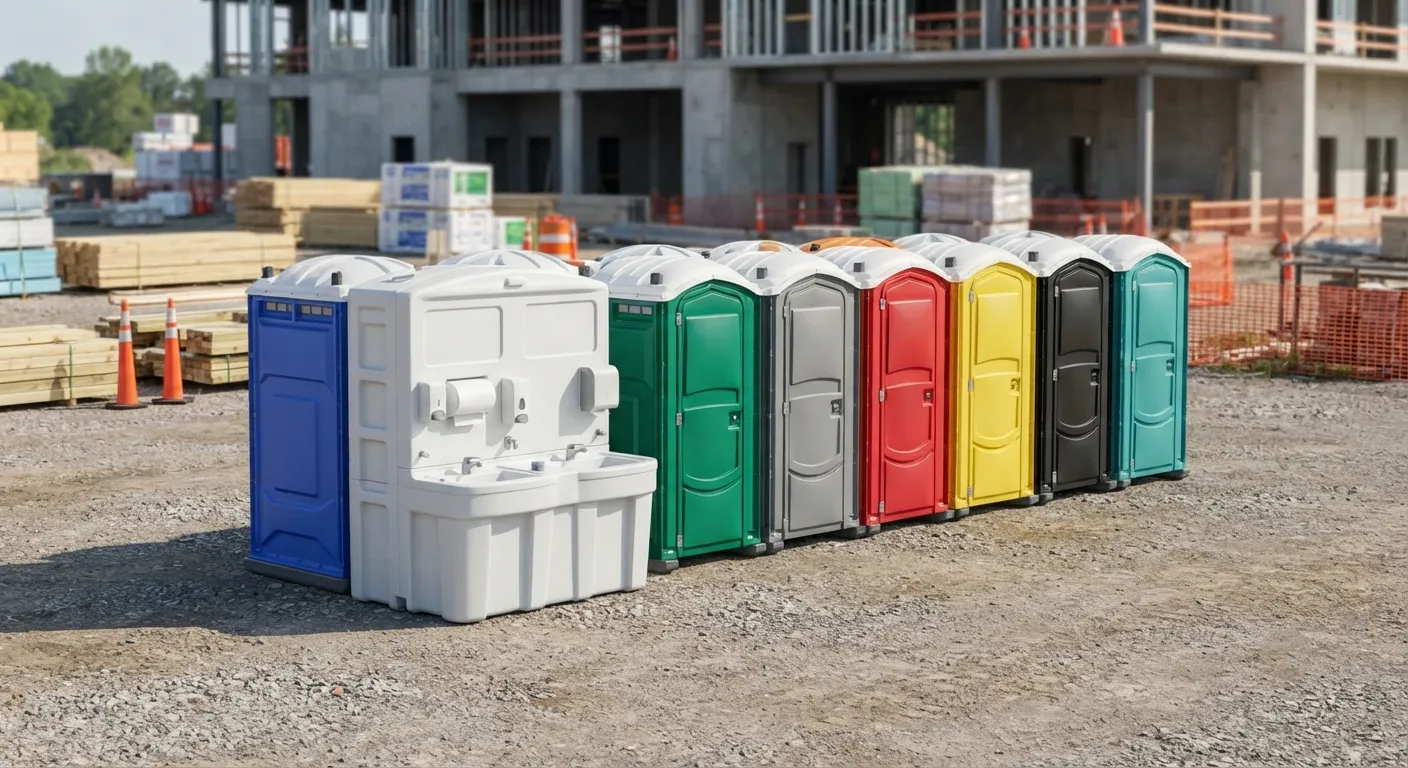
Fast turnover units near corrals, a few deluxe or flushable units at VIP and medical tents, and ADA-compliant placement at every cluster: that's the standard race-day mix in Pasadena. A standard unit runs about 44 by 48 inches on the ground and stands roughly 92 inches tall, so tight sidewalk placement near a start chute usually still works without blocking the route. For finish-line VIP areas or sponsor tents, a deluxe flushable porta potty upgrades the experience without needing a truck-mounted trailer. ADA Standards section 213.2 requires that where single-user units are clustered, at least 5 percent must be accessible, with a minimum of one no matter how small the cluster, so every aid station needs its own ada accessible porta potty even if it only has two or three units total. ADA Standards section 304.3.1 also calls for a 60 inch turning circle in front of accessible units, which matters on narrow sidewalks common along Pasadena race routes. If the event runs multi-day, like a weekend expo plus race morning, a restroom trailer rental at the finish line handles higher-traffic hours better than stand-alone units. Larger races sometimes bring in a 4 stall restroom trailer for staff and volunteer use behind the scenes, separate from runner-facing units. Don't forget handwashing: pair units with a handwashing station rental at food and medical tents, since 29 CFR 1910.141(d)(2) requires soap and towels or a hand-drying device, not sanitizer alone.
Why does power and fencing matter for a race weekend?
Timing equipment, medical tents and finish-line video boards all need reliable power, and a poorly braced temporary power pole can go down mid-race if it's not set right. Knowing how to brace a temporary power pole matters because wind gusts and cable tension both pull sideways, and a pole set without adequate guying can lean or topple during a live event. Pair your restroom plan with a temporary power pole sized for your timing and PA equipment, and route cords away from runner lanes. Crowd control matters just as much as power: closed-course races through Pasadena streets need barriers separating runners from spectators and vehicle traffic. OSHA 1926.202 requires barricades to conform to ANSI D6.1, a standard worth mentioning to any fencing vendor you hire. A crowd control barrier rental at corrals and finish chutes keeps the course orderly, while temporary fence rental around staging areas, generators and restroom clusters keeps unauthorized foot traffic out. If your race is 5.6 miles northwest toward La Cañada Flintridge or loops south toward South Pasadena, 4.8 miles away, expect multiple jurisdictions and confirm placement in the public right of way with each city, since permit rules were not verified for this page. For night-before setup or early wave starts before sunrise, a light tower rental at staging areas and restroom clusters helps volunteers and runners see clearly, consistent with OSHA 1926.56(a) minimum illumination guidance for work areas.
How far in advance should we book race-day restrooms?
Book 4 to 8 weeks out for a marathon-scale event, longer if it overlaps another Pasadena event competing for the same equipment. Standard unit weekly rates run $130 to $500 depending on cluster size and add-ons; see porta potty rental cost for the full breakdown.
Do we need ADA units at every aid station?
Yes. ADA Standards section 213.2 requires at least one accessible unit per cluster, even a small one. Spread ADA units across the course rather than concentrating them only at the finish line, per ada restroom requirements.
Can we rent restroom trailers instead of standard units?
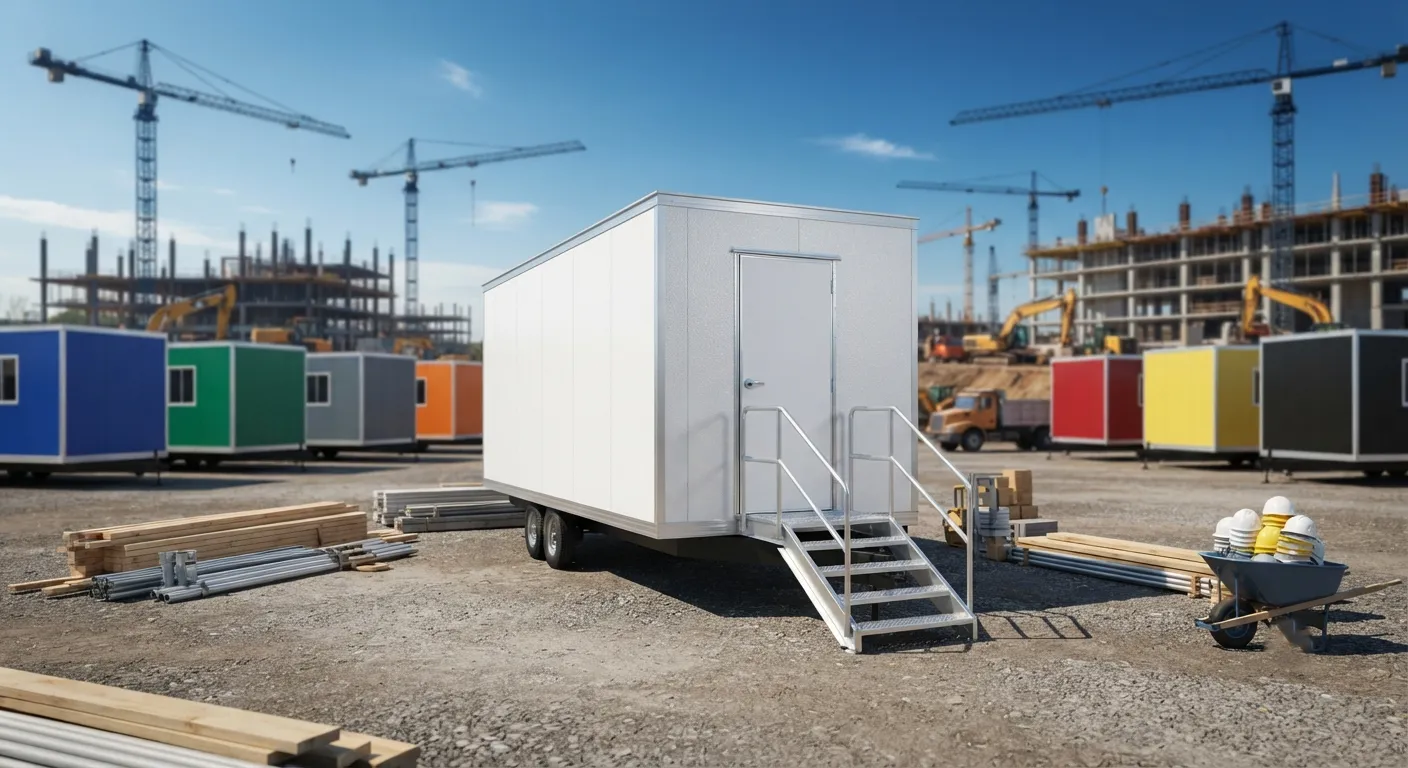
Yes, and many races do for finish-line VIP zones. A luxury restroom trailer suits sponsor tents or media areas, while standard units still handle the bulk of runner traffic along the course.
What about handwashing at aid stations?
Pair each aid station with a portable sink or handwashing unit. 29 CFR 1910.141(d)(2) requires soap and towel or drying device access, and a portable sink rental satisfies that at hydration and food stops.
Who do we contact to plan a race in Pasadena?
Start with request a quote with your route map and estimated headcount. Our contact page connects you directly with a planner who has handled closed-course events across the city.
Next step
Get a delivery date
Tell us the address, the dates and the headcount. We size the order and confirm the route.